Death To The World

“The World” is the general name for all the passions. When we wish to call the passions by a common name, we call them the world. But when we wish to distinguish them by their special names, we call them passions. The passions are the following: love of riches, desire for possessions, bodily pleasure from which comes sexual passion, love of honor which gives rise to envy, lust for power, arrogance and pride of position, the craving to adorn oneself with luxurious clothing and vain ornaments, the itch for human glory which is a source of rancor and resentment, and physical fear. Where these passions cease to be active, there the world is dead… Someone has said of the Saints that while alive they were dead: for though living in the flesh, they did not live for the flesh. See for which of these passions you are alive. Then you will know how far you are alive to the world, and how far you are dead to it.”

–St. Isaac of Ninevah

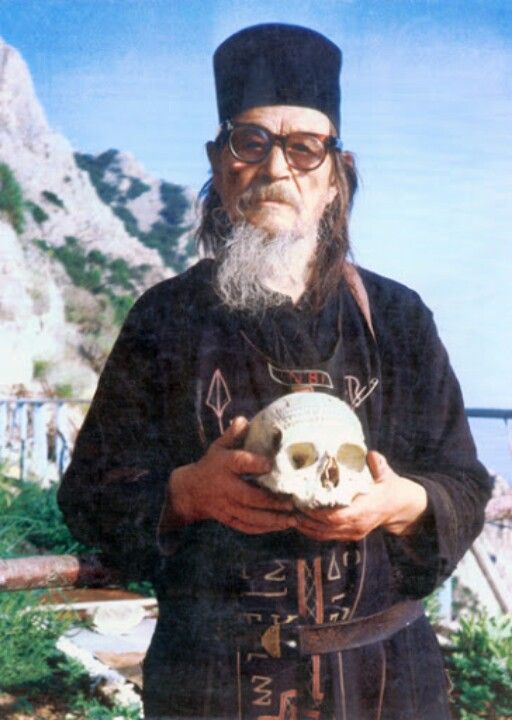
Elder Nikon holding his spiritual father’s skull

Create Local Debian Package Repository

Step1: Installing Required Package

On Debian-based systems, all repositories are managed by the APT utilities (apt, apt-get, apt-cache, etc). The dpkg-dev package is needed for local repository creation compatible with APT.

First Update the system packages using the following command:

$ sudo apt update && sudo apt upgrade

Next install the dpkg-dev package by typing the following:

$ sudo apt-get install dpkg-dev

When package installation finishes, proceed with creating a directory for your package files.

Step 2: Create a Directory for Local Repository

Create a directory to keep binary packages. For this example, we’ll use /opt/local/debs, but you can use any directory you may like.

$ sudo mkdir -p /opt/local/debs

Next, change directory:

$ cd /opt/local/debs

Step 3: Adding Packages to Local Repo Directory

For the purpose of this tutorial, we will download the chrome-browser package to our local repository, because it is not found in the default Ubuntu repository:

$ sudo wget https://dl.google.com/linux/direct/google-chrome-stable_current_amd64.deb

You can copy or download as many packages as you like in this step.

Step 4: Create the Required Repository Package Meta for APT

For this, we must run several dpkg-scanpackages commands. I’ll switch to the root user account because I’m using the /opt/local directory to skip using sudo.

$ sudo su

First, we will create a Release file by running the following command:

# dpkg-scanpackages . /dev/null > Release

You should get a similar output depending on how many packages you have added to the local repository:

dpkg-scanpackages: warning: Packages in archive but missing from override file:
dpkg-scanpackages: warning: google-chrome-stable
dpkg-scanpackages: info: Wrote 1 entries to output Packages file.

Next, scan all the deb files in the directory and create an appropriate Packages.gz file

# dpkg-scanpackages . /dev/null | gzip -9c > Packages.gz

Output:

dpkg-scanpackages: warning: Packages in archive but missing from override file:
dpkg-scanpackages: warning: google-chrome-stable
dpkg-scanpackages: info: Wrote 1 entries to output Packages file.

Note that you must run these commands every time you add new deb packages to your local repository directory. You could also create a simple bash script and run it whenever you add new packages.

To List local repo directory structure, run ls command:

$ ls -l

Output:

-rw-r--r-- 1 root root 83325072 May 8 02:29 google-chrome-stable_current_amd64.deb
-rw-r--r-- 1 root root 761 May 17 20:44 Packages.gz
-rw-r--r-- 1 root root 1321 May 17 20:39 Release

Step 5: Adding Our Local Repository to Sources.list

The final step is to edit the sources.list file. Edit the file using the editor of your choice:

$ sudo nano /etc/apt/sources.list

Add the following line to your /etc/apt/sources.list:

deb [trusted=yes] file:/opt/local/debs ./

Now we will test our local repository in action.

Step 6: Verification

We can verify by installing or removing the packages from Local Repository.

First we must update the packages:

$ sudo apt-get update

Now we install our package as usual using apt-get:

$ sudo apt-get install google-chrome-stable

Now your local packages can be installed, updated and removed using Synaptic, aptitude and the apt commands: apt-get, apt-cache, etc. When you run apt-get install, any dependencies will be resolved and installed for you, as long as they can be met.

We can easily remove our installed packages the same way as with any installed package on our system:

$ sudo apt-get remove google-chrome-stable

Conclusion

In this tutorial, we have learned how to create our own local Debian repository and add/remove packages locally. These steps apply to most Debian-based distributions.

St John Cassian On the Eight Vices – On Anger

Our fourth struggle is against the demon of anger. We must, with God’s help, eradicate his deadly poison from the depths of our souls. So long as he dwells in our hearts and blinds the eyes of the heart with his somber disorders, we can neither discriminate what is for our good, nor achieve spiritual knowledge, nor fulfill our good intentions, nor participate in true life; and our intellect will remain impervious to the contemplation of the true, divine light; for it is written, ‘For my eye is troubled because of anger’ (Ps. 6:7. LXX). Nor will we share in divine wisdom even though We are deemed wise by all men, for it is written: ‘Anger lodges in the bosom of fools’ (Eccles. 7:9). Nor can we discriminate in decisions affecting our salvation even though we are thought by our fellow men to have good sense, for it is written: ‘Anger destroys even men of good sense’ (Prov. 15:1. LXX). Nor will we be able to keep our lives in righteousness with a watchful heart, for it is written; ‘Man’s anger does not bring about the righteousness of God’ (]as. i: 20). Nor will we be able to acquire the decorum and dignity praised by all, for it is written: ‘An angry man is not dignified’ (Prov. 11: 25. LXX). If, therefore, you desire to attain perfection and rightly to pursue the spiritual way, you should make yourself a stranger to all sinful anger and wrath. Listen to what St Paul enjoins: ‘Rid yourselves of all bitterness, wrath, anger, clamor, evil speaking and all malice’ (Eph. 4:31). In saying ‘all’ he leaves no excuse for regarding any anger as necessary or reasonable. If you want to correct your brother when he is doing wrong or to punish him, you must try to keep yourself calm; otherwise you yourself may catch the sickness you are seeking to cure and you may find that the words of the Gospel now apply to you: ‘Physician, heal yourself (Luke 4:23), or ‘Why do you look at the speck of dust in your brother’s eye, and not notice the rafter in your own eye?’ (Matt. 7:3). No matter what provokes it, anger blinds the soul’s eyes, preventing it from seeing the Sun of righteousness. Leaves, whether of gold or lead, placed over the eyes, obstruct the sight equally, for the value of the gold does not affect the blindness it produces. Similarly, anger, whether reasonable or unreasonable, obstructs our spiritual vision. Our incensive power can be Used in a way that is according to nature only when turned against our own impassioned or self-indulgent thoughts. This is what the Prophet teaches us when he says: ‘Be angry, and do not sin’ (Ps. 4:4. LXX) – that is, be angry with your own passions and with your malicious thoughts, and do not sin by carrying out their suggestions. What follows clearly confirms this interpretation: ‘As you lie in bed, repent of what you say in your heart’ (Ps. 4:4. LXX) – that is, when malicious thoughts enter your heart, expel them with anger, and then turn to compunction and repentance as if your soul were resting in a bed of stillness. St Paul agrees with this when he cites this passage and then adds:

‘Do not let the sun go down upon your anger: and do not make room for the devil’ (Eph. 4: 26-27),

by which he means: ‘Do not make Christ, the Sun of righteousness, set in your hearts by angering him through your assent to evil thoughts, thereby allowing the devil to find room in you because of Christ’s departure.’ God has spoken of this Sun in the words of His prophet: ‘But upon you that fear My name shall the Sun of righteousness arise with healing in His wings’ (Mal. 4:2). If we take Paul’s saying literally, it does not permit us to keep our anger even until sunset. What then shall we say about those who, because of the harshness and fury of their impassioned state, not only maintain their anger until the setting of this day’s sun, but prolong it for many days? Or about others who do not express their anger, but keep silent and increase the poison of their rancor to their own destruction? They are unaware that we must avoid anger not only in what we do but also in our thoughts; otherwise our intellect will be darkened by our rancor, cut off from the light of spiritual knowledge and discrimination, and deprived of the indwelling of the Holy Spirit.

It is for this reason that the Lord commands us to leave our offering before the altar and be reconciled with our brother (cf. Matt. s: 23-24), since our offering will not be acceptable so long as anger and rancor are bottled up within us. The Apostle teaches us the same thing when he tells us to ‘pray without ceasing’ (1 Thess. 5:17), and to ‘pray every where, lifting up holy hands without anger and without quarrelling’ (1 Tim. 2:8). We are thus left with the choice either of never praying, and so of disobeying the Apostle’s commandment, or of trying earnestly to fulfill his commandment by praying without anger or rancor. We are often indifferent to our brethren who are distressed or upset, on the grounds that they are in this state through no fault of ours. The Doctor of souls, however, wishing to root out the soul’s excuses from the heart, tells us to leave our gift and to be reconciled not only if we happen to be upset by our brother, but also if he is upset by us, whether justly or unjustly; only when we have healed the breach through our apology should we offer our gift. We may find the same teaching in the Old Testament as well. As though in complete agreement with the Gospels, it says: ‘Do not hate your brother in your heart’ (Lev. 19:17); and: “The way of the rancorous leads to death’ (Prov. 12: 28. LXX). These passages, then, not only forbid anger in what we do but also angry thought. If therefore we are to follow the divine laws, we must struggle with all our strength against the demon of anger and against the sickness which lies hidden within us. When we are angry with others we should not seek solitude on the grounds that there, at least, no one will provoke us to anger, and that in solitude the virtue of long-suffering can easily be acquired. Our desire to leave our brethren is because of our pride, and because we do not wish to blame ourselves and ascribe to our own laxity the cause of our unruliness. So long as we assign the causes for our weaknesses to others, we cannot attain perfection in long- suffering. Self-reform and peace are not achieved through the patience which others show us, but through our own long- suffering towards our neighbor. When we try to escape the struggle for long-suffering by retreating into solitude, those unhealed passions we take there with us are merely hidden, not erased; for unless our passions are first purged, solitude and withdrawal from the world not only foster them but also keep them concealed, no longer allowing us to perceive what passion it is that enslaves us. On the contrary, they impose on us an illusion of virtue and persuade us to believe that we have achieved long-suffering and humility, because there is no one present to provoke and test us. But as soon as something happens which does arouse and challenge us, our hidden and previously unnoticed passions immediately break out like uncontrolled horses that have long been kept unexercised and idle, dragging their driver all the more violently and wildly to destruction. Our passions grow fiercer when left idle through lack of contact with other people. Even that shadow of patience and long-suffering which we thought we possessed while we mixed with our brethren is lost in our isolation through not being exercised. Poisonous creatures that live quietly in their lairs in the desert display their fury only when they detect someone approaching; and likewise passion-filled men, who live quietly not because of their virtuous disposition but because of their solitude, spit forth their venom whenever someone approaches and provokes them. This is why those seeking perfect gentleness must make every effort to avoid anger not only towards men, but also towards animals and even inanimate objects. I can remember how, when I lived in the desert, I became angry with the rushes because they were either too thick or too thin; or with a piece of wood, when I wished to cut it quickly and could not; or with a flint, when I was in a hurry to light a fire and the spark would not come. So all-embracing was my anger that it was aroused even against inanimate objects. If then we wish to receive the Lord’s blessing we should restrain not only the outward expression of anger, but also angry thoughts. More beneficial than controlling our tongue in a moment of anger and refraining from angry words is purifying our heart from rancor and not harboring malicious thoughts against our brethren. The Gospel teaches us to cut off the roots of our sins and not merely their fruits. When we have dug the root of anger out of our heart, we will no longer act with hatred or envy. ‘Whoever hates his brother is a murderer’ (1 John 3:15), for he kills him with the hatred in his mind. The blood of a man who has been slain by the sword can be seen by men, but blood shed by the hatred in the mind is seen by God, who rewards each man with punishment or a crown not only for his acts but for his thoughts and intentions as well. As God Himself says through the Prophet: ‘Behold, I am coming to reward them according to their actions and their thoughts’ (cf. Ecclus. 35:19); and the Apostle says: ‘And their thoughts accuse or else excuse them in the day when God shall judge the secrets of men’ (Rom. 2:15-16). The Lord Himself teaches us to put aside all anger when He says: ‘Whoever is angry with his brother shall be in danger of judgment’ (Matt. 5:22). This is the text of the best manuscripts; for it is clear from the purpose of Scripture in this context that the words ‘without a cause’ were added later. The Lord’s intention is that we should remove the root of anger, its spark, so to speak, in whatever way we can, and not keep even a single pretext for anger in our hearts. Otherwise we will be stirred to anger initially for what appears to be a good reason and then find that our incensive power is totally out of control. The final cure for this sickness is to realize that we must not become angry for any reason whatsoever, whether just or unjust. When the demon of anger has darkened our mind, we are left with neither the light of discrimination, nor the assurance of true judgment, nor the guidance of righteousness, and our soul cannot become the temple of the Holy Spirit. Finally, we should always bear in mind our ignorance of the time of our death, keeping ourselves from anger and recognizing that neither self-restraint nor the  renunciation of all material things, nor fasting and vigils, are of any benefit if we are found guilty at the last judgment because we are the slaves of anger and hatred.

Nikodimos, St.. The Philokalia (Kindle Locations 2192-2194). Kindle Edition.


OpenNMS Migration

To Do:

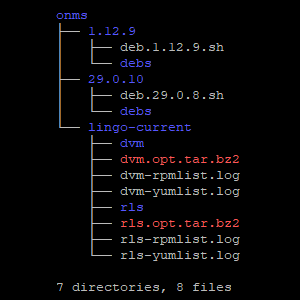
  1. Staging directory structure is:

    File Tree of Lingo Onms Diff Staging

  2. Download Onms 1.12.9 deb without dependencies & place in ~/onms/1.12.9/debs .
    for name in ${Packages}
    do
    wget https://debian.opennms.org/dists/opennms-1.12/main/binary-amd64/${name}
    done

    List of Onms 1.12.9 deb packages:   Onms-1.12.9.debs
  3. Download Onms 29.0.10 (29.0.8 currently installed) & place in ~/onms/29.0.10/debs
    for name in ${Packages}
    do
    wget  https://debian.opennms.org/dists/opennms-29/main/binary-amd64/${name}
    done


    List of Onms 29.0.10 Debian Packages: Onms-29.0.10.debs
  4. Request list of installed pkgs from Mike

       rpm -qa >>list-of-rpm-pkgs.txt
    yum list installed >>list-of-yum-pkgs.txt

    Old OpenNMS installed rpm list: rls-rpmlist
    Old OpenNMS installed yum-pkgs: rls-yumlist

    New OpenNMS installed rpm list: dvm-rpmlist
    New OpenNMS installed yum list: dvm-yumlist

  5. Install only Onms pkgs from each version

    1. upload dvm.opt.tar.bz2 & rls.opt.tar.bz2 to ~/onms/
    2. create ~/onms/dvm , ~/onms/rls & untar respective tar.bz2 archives
    3. compare list of packages in 1.12.9 repository with rls installed packages
    4. install debs without dependencies for each version, create tar & pipe to ~/onms/clean-install-1.12.9 & ~/onms/clean-install-29.0.10 and uninstall debs after each tar pipe.
  6. Identify and remove all binary files from ~/onms/clean-install-*
  7. Run contextual diffs on all configurable files of ~/onms/clean-install-*
  8. Document files clean-install-* differences & produce sed scripts if needed
  9. Identify and remove all binary files from ~/onms/lingo-current/*
  10. Run contextual diffs on all configurable files of ~/onms/lingo-current/*
  11. Document lingo-current/* files differences & produce sed scripts if needed
  12. Create report & MOP
  13. Create & deliver archive of config files 

Add a font to WordPress via custom plugin

  1. Create a plugin file like GeoLiv.php


    /* Plugin Name: GeoLiv Custom Code Plugin
    Description: Place to insert custom code into WordPress
    Look at this post source - a plugin is re-writing what you see here
    */
    function add_font() {
    $font_script = <<<'EOD'
    <link href="https://fonts.googleapis.com/css?family=Roboto+Slab" rel="stylesheet">
    EOD;
    echo $font_script;
    }
    #add_action('wp_head', 'add_font');
  2. Compress to zip
  3. Login to WordPress and navigate to to your WordPress dashboard, and click “Plugins->Add New”
  4. Upload plugin.
  5. Activate plugin.
  6. Go to your WordPress dashboard and click “Appearance->Edit CSS”
  7. This will take you to your theme customization page where you can insert all the CSS you want. Now add the following:

    p {
    font-family: 'Roboto Slab', serif;
    }
  8. Font should be active.


Devil In Mind – Father Nikon of The Holy Mountain

Devil In Mind


Human beings think more than they breathe.   In just a breath we can have many thoughts and that is something we don’t conceive of. We don’t consider that all the thoughts we have form our character, our personality.  Our thoughts give us our identity, represent who we are. This occurs to such an extend, that an American philosopher says “you are what you think”

Our entire life is a result of our thoughts. With our thoughts we can change our future for example,  Our future is not given is not written , there is no “kismet”. We will decide on our future. Our thoughts can make even God’s opinion about our future to change

As outrageous or unimaginable that this might  seem, it’s in the  Bible teachings (Old Testament) We see it for example in Jonah’s story and the city of Nineveh.  The citizens of this big city of the time, were fallen into sin and God decided to destroy the city, “Nineveh shall be destroyed”.

God took a decision for the future of the city Jonah’s went to his fellow citizens and preached for repentance and the whole population did regret and consequently God changed His decision. “He relented and did not bring on them the destruction He had threatened” (Jonah 3) and the population was saved. This is what can happen from a change of mind which can affect our future.

We have to make a distinction here. There is a difference between the word “thought” and the word “logismos” (greek word meaning the thought that insists and keeps coming again and again) Sometimes they do concur and have the same meaning as it means an idea, a thought, a notion But “logismos” is the insisting thought and not the one that passes by,  the one that comes and comes again, which keeps bothering us. These insisting thoughts have tremendous power not only in our lives in the present or in our future, but even to our bodies

Let’s give an example of how a thought can affect our bodies.

I was in a monastery ,one father (monk) could not eat sesame paste he detested it , but he loved “halvas” (kind of candy) So he ate “halva” often and it was one of his favorite things to eat,  until another monk asked him, “How come that you detest sesame paste and love halva?”  And the first one answered “Why? , How do you associate these 2 things , what’s their connection?” “the main  ingredient of halva is sesame paste” said the other one.  At the moment the first monk heard that ,he felt nauseous and started vomiting. This thought affected  his body to react in such a way.

There is a very good psychiatrist in Athens who has a well known dean as a spiritual Father. This psychiatrist had a patient, a lady with a major psychological problem and due to her treatment he brought some very rare and expensive drugs from Holland. He explained  to the lady to be very careful to hear and implement the drug therapy with accuracy ,because these drugs were very rare and it would be so difficult to have them again soon. So he gave her all the instructions and steps of the therapy. She heartily thanked him for his concern and  efforts that the doctor did especially for her case and she took the drugs and followed the instructions step by step and she was healed. She was cured and she praised God because she was suffering over 10 years with this illness and these medicines made her all well.

What is the main point here?  That these drugs were just candies, there were not pills.   This is what thought can do, how it essentially can affect the body. Unfortunately it can not only have a positive effect on the body like the lady in this case ,but also negative.

I will tell you another incident which is beyond any imagination but is 100% true.  I can tell you the name of the doctor when I finish the speech.  This doctor says, that a relative of him went to a magician (one, who saw the future in some crystals) who told him that he had a heart problem and he would die in the next full moon. The doctor’s relative was healthy, full of energy and generally happy but he had a very good opinion for this famous magician and trusted her a lot.

The magician saw a crystal and foretold the future of each person and many of these did really happen. That’s why she had such a reputation and had gained the confidence of the doctor’s relative.  In his case she had made a negative suggestion and he accepted this thought. He was terrified and his mind stuck to this idea that he was going to die in the next full moon. He actually started to talk to his intimates as he prepared the inheritance issues, made his will and this terrible submission was finally fulfilled because he believed it completely.  He died.  He really died without a significant health problem. This is the power of insisting thoughts both for good and for bad.

Insisting thoughts are divided into 3 types , let’s separate them.

First are our own thoughts, our ideas, these that a human mind can produce.

Secondly are these that the devil brings to us. We say for example “a thought came by” and we can not imagine how accurate and spot on we are, by saying this sentence. It’s correct that it was brought to you, literally someone brought it to you.  The Devil is a spirit and as that he can brush thoughts in our minds.  So there are our own thoughts, thoughts that come from The Devil  and thirdly thoughts that good God send us.

How can we distinguish them?

In order to concern for our own thoughts and the thoughts that God send us and reject the ones that devil brings to us?

How can we do this discrimination in our insisting thoughts?

It is very simple . We can not do it. By no means can we make this distinction of our thoughts, God’s and Devil’s.  This needs extreme spiritual knowledge, extreme efforts.  The Fathers of our church say that the charisma of distinguishing these thoughts is the greatest virtue.

Then how shall we accept God’s thoughts in order to live and  reject bad thoughts from our own or by devil in order not to perish?

Generally we accept good thoughts and discard the bad ones It seems simple but it isn’t.

Because immediately two problems arise.

First, how a bad thought is confronted and rejected and secondly when is a good thought is brought by the devil?

How can we know that it comes from the devil to turn it down?

Because, we very well know that the time when the devil appeared with horns and tail is way back.

He has now changed form, He knows to disguise

He comes as a brilliant idea, as a man with many gifts ,as a politician with eloquence, as a cleric who will fascinate you with his speeches.

How can we figure out that the devil is behind all this?

When we have a bad thought it’s easy to reject it but when it comes like a nice idea deriving from the devil what can we do?

In Old Testament it says “There is a way that appears to be right, but in the end it leads to death” (Proverbs 14:12)

There is a path that you start to walk and it seems good and useful and at the end death is awaiting. How can we recognize that, in order not to start this effort that will lead us to death?

For the first one, of how we deal and reject a  bad thought, I will give a small plan, a plan of how this bad thought progresses so that you can remember it

Each thought has a development for example, we pass along a brothel or we see a wallet on the ground.

The idea comes,  “get in” or “take it.”

This stage of thinking is called “infection”.

It attacks , it strokes us We  repel it , deny it, we say “no I won’t go in” or ” I won’t take the wallet I found.”

The thought insists “get in, just to take a look, there could be something awesome” or “the wallet seems overfull, the owner shouldn’t have a financial problem”

We still send away this thought “no” but it still keeps coming.

At this stage, “infection”, we are not responsible before God for this thought, however bad  and sinful it is. We are innocent before God.

So, this insisting thought comes again, we repel it , it comes again we reject it and this second stage is called “struggle, fight”

We are wrestling with this idea

So, for the first stage we are not responsible for the “infection”.

But for the second , the “struggle” ,we are not only not responsible, but we will receive a wreath from God. We will receive a spiritual wage from God because we do fight ,reject the bad idea, although it is so difficult to subdue it, to prevail over the temptation and the wish that is trying to lure us.

From this fight for the love of God we will have benefits, we will be saved.

On the other hand, if we start to discuss it over, in our minds and say “ok I will go in just to see if the girl is beautiful, I won’t do anything else and I will exit.” or “I will take the wallet and I will do a charity, there is a lot of money,  I will keep a small amount and I will help someone with the rest.”

From this stage and onward our fault begins.

We are not yet guilty, but the sin begins and is called “combination” or “coupling”.

We are trying to find excuses, to make it easy, from that point the guilt begins.

From the moment we say in our mind “I get in” or “I’ll take it” the story is finished.

We are guilty before God. It doesn’t matter if we finally get in or take the wallet, because this can depend on external factors like someone see us at the time we want to enter and we feel shame and leave.

This doesn’t matter as the bad thought has won us in our mind.

These are the four stages of the insisting thought: the “infection”, the “struggle”, the “combination” and the “consent”. From “consent” everything starts.

There is nothing harmful that we can do without consenting firstly in our minds.

There are truly very few bad things or sins or crimes that we can do from carelessness, due to recklessness, inattention or negligence.

Most of the time we must assent to commit the evil thing in our mind first and we do it afterwards.

So if this evil thing doesn’t occur inside us then it won’t ever occur outside us.

That is the meaning of Jesus words “anyone who looks at a woman lustfully has already committed adultery with her in his heart.” (Matthew 5:28) and also in Holy Bible it says, “Anyone who hates a brother or sister is a murderer” (1 John 3:15). He will be judged as a murderer and  the Fathers of the church speak  about envy which can result in murder.

When you envy and are jealous of someone you have already killed him in your heart. It is a potential murder. That’s why Jesus insisted, “First clean the inside of  the cup and dish, and then the outside also will be clean.” (Matthew 23:26)

Otherwise ,however nice you look externally “You are like whitewashed tombs, which look beautiful on the outside  but on the inside are full of the bones of the dead and everything unclean.”(Matthew 23:27)

That’s why we pay such great attention to these thoughts.  

We have mentioned the stages of these thoughts, which are four. We are also going to relate four ways to deal with them. All these might be interlarded, enriched and branched.

We will just refer to a skeleton, a framework and speak telegraphically, just a simple scheme easy to remember.

So how do we fend off the insisting thought?  We repel it right from the start. We shouldn’t allow it to take root inside us. At the moment it comes we repulse it straight away when it is obvious that it is evil.  Send it away immediately before it strengthens inside you.

It seems like you know a killer is right outside your street door and knocking. If you don’t open up to him he is quite away and you are safe. If you open the street door and let him in, he is now pretty close.  Now you have to make much greater effort to send him away from your yard.

If you still open your door and let him in your house, he will step inside and start knocking on your room door and then it’s much more difficult to put him out. If you open your room then you will start to fight against him and it ends up to be an even harder thing to send him away.

The same thing happens with an illness.  You are in the first symptoms of it and your doctor gives you some medicines to take, to have a short therapy. You do obey, you are saved.

You don’t obey, you are getting worse. You will then need more pills, antibiotics, greater therapy.

You don’t follow the instructions, then you will need surgery and you don’t know if you will live in the end.

That’s why straight away ,when we are sure that something is evil we have no excuse, we send it away at once.

We don’t want to think badly.  We don’t want to accept bad thoughts.  Yes but how can that be done?

You see, it needs practice, like everything new we learn it needs practice, with insistence, little by little.  We have to learn to be awake, sharp witted, and not to be abstracted.

When someone talks to us we should pay attention to what he is saying.  If our mind buzzes off, we must pull it together if I forgot myself, or lost a point that he mentioned.  Wherever our body is, there should be our mind also and not elsewhere,  the body, ourself and our mind.

There was a communist, a fanatic one.  During the civil war the opposite side killed his mother and father,  his sister have being raped at the age of nine and afterwards slaughtered along with his brothers.  His dream was,  as he told father Nikon,  to kill a ranger and then die.  Not to pass away before killing a gendarme, a policeman.

But human life has inversions, things have been changed and he became a faithful christian. He became a monk and he came to mount Athos.

His body did come but the mind?

His elder was asking him at a time, “Where were we today, my son?” and he replied  ” Oh my elder,  we were with Lenin and Krupskaya (Lenin’s wife) sermonizing the ideas of communism in this place..” and his elder was smiling.

“say the prayer my son, Lord Jesus Christ have mercy on me” in order to recollect the mind

A week later the elder asked, “How are we doing my son, Where are your thoughts?”

“Well my elder ,we are in Greece, we are emending Greece those things shouldn’t happen in that meeting of my comrades, they should have taken other decisions”,

The elder was smiling. After some time, “How is it going my son?”

“My elder, we have arrived in  Ouranoupoli “(the city right before entering mount Athos) and the next time, “How is it going my son?” “Well my elder, the superintendency didn’t decide correctly on that occasion”.  The monk’s mind had entered into the Holy Mountain affairs.  The monasteries should resolve a specific issue differently, he was correcting Mount Athos decisions now.

After a little while “How is it going my son?” “Well my elder we are around our place “skiti” (very small monasterial community).

Little by little only.  We can not recollect our mind in a instant, to be in its proper status when in all our previous lifetime had let it go away, to let it get accustomed to that and when time comes for us to pray or do spiritual work or even to read something and absorb this knowledge, then we must pay attention to this task.

It is not easy to gather our mind on this particular moment, when all day long it goes around collecting “trash” and “garbage”. That’s why from the moment we awake in the morning, little by little, we must try to keep the mind in its position.

Where am I?  I’m here, What am I doing?  I do this work

This may look insignificant, but it is important that you bring your thoughts to here and now and this can be practiced and gotten used to and finally the mind learns to keep this state.

These are things that we have seen, learned, lived and know that it is so and are so simple that you can see by yourself the truth of it.

Alright, but what are we going to think?

The mind can’t stay blank, it has to think of something.  We can not think constantly of the paper we read.  We have to think of something.

What should we do?  Simply put, we will not fill the mind with a thousand of matters.

The mind can’t stay still, immobile, it always needs something.

There is an Hindu saying, about how we can think positively.

It says that if you put an elephant into a room , there is nothing else that can get in.

Exaggeration, but very characteristic.

The Fathers of Orthodox church say “consider positively, so you don’t consider negatively, think good to not think bad,  see good to not see bad,  listen to good to not listen to bad.

The mind can’t stay unmoving. It needs to be fed, it works ,so you’ll give it  good tasks not to be space for evil things.

This is the second way.

There is a petition in Eucharist before Holy Communion that says “bury through my kindness thoughts all the devious consultations”

The mind can’t stay still, but by kind thoughts we will bury the evil cogitations. We shall throw them away,  We won’t allow them any space.

The first way ,as we said,  is the repulsion, straight away.

The second is not to allow any room for them.

The third is to avoid the causes that give birth to such thoughts.

Beware, we can’t say that I will not think whorish, fleshly thoughts and on the other hand to view porn films, or magazines or open tv on programs that we know what we will see and simultaneously claim that we shall keep our mind clean

We shall avoid the causes that produce the evil thoughts that rule us and we wish to repel.

You can’t say that I won’t think bad, I’ll think good when you hear indecent songs

They will get stuck in your head. You must avoid the causation places.

There is a case in the Bible when God says  Lot to leave Sodom and Gomora and go, not only away from them,  not to the suburbs, but climb the mountains to be saved.

There was a young person addicted to narcotics who went to elder Paiessios (contemporary Saint, monk on mount Athos who reposed in 1994)

Elder Paisios told him, “What can I do for you my boy as you are like the one who wants to quit smoking and at the same time hangs about the tobacco store. He won’t buy the first time, nor the second, but the third he will.”

You must drive away even from the places which generate troubles for you, apart from looking out for what you think. The Fathers say “get away and get saved”.

When I was an undergraduate (father Nikon)  we got ready to see a film , a shameful one and I asked another friend if he was coming with us.  The other one asked, “would Christ go to that film?”  “What did you say?” father Nikon asked back.  It’s easy said the other one, when I want to go somewhere I ask myself if Christ would go there and if my consciousness says yes , I go.  Father Nikon was amazed by that reasoning. His friend had found a way to avoid the places that could trap him.

Things are pretty simple, as long as we learn, remember and practice them.

This was the third way, avoiding the causes.

Now, the problem is that we want something but we can’t do it.

We want to repulse the thought straight away but we can’t.

We want to avoid the places that will lead us to a fall but we can’t.

We want to have kind thoughts instead of bad ones but we can’t.

The Apostle Paul says,  “I can do everything.” How does he say that?  What does he mean by that?

Every human mind has a maximum experience of about 100 years as we usually can’t live more,  we die.  The Devil has the experience of centuries.  How can we confront him, how could the apostle Paul?

“I can do all this through Him who gives me strength.” (Philippians 4:13) he says.

When Jesus Christ strengthens me I can do all things. Jesus Christ said “apart from me you can do nothing” (John 15:5). We can’t do anything without Christ’s aid. Even with our attitude to go to the spiritual father, we bring a wound to the devil’s wishes. The time the priest is saying the absolution prayer, he is gone (the devil).

We can not be humble to the air, there is no meaning in self humility. It is of great importance to be humble before another one for the love of Christ, to preserve Christ’s precept.

Only in practice will you see that these are true. The way, practically, so many millions people in the passage of 2000 years learned them, in this way you can ascertain them by yourself.

We have already said that the time has passed when devil appeared with horns and tail.

Nowadays he’s coming like a nice thought. We can pull through a thought we know is bad, with the 4 ways I told you before: repulsion, don’t leave space, avoiding the causes and the sacraments of church.

But… When the devil comes as a kind thought?  When it is coming like a dear friend?  How can we then understand it?

Brethren there are numerous species of demons and there are 2 ways of demonism.

There are 2 ways that the devil can totally dominate someone.

There are some thick demons. The demons of gluttony, fornication and avarice.

Everything we feel is not always from natural causes.

In a neighboring monastery there was a father who, all of the sudden, started to eat a lot more than average. He ate 10 loaves of bread per day but he wasn’t fat.

Where did all this food go? 10 loaves of bread per day. Where were they going?

The other fathers were concerned and read prayers over him and after a week he recovered and he, who ate 10 loaves of bread  and was still hungry, now he was satisfied with 2 slices of bread.

We can recount a lot of stories on these issues.

Fornication demon, anger demon, gluttony demon ,these are thick demons.

But there are other demons, princes, masters, sharp like blades and alas to him who falls in their hands. There is nothing that can save one from them.  If God doesn’t help this man miraculously, he is in great danger.

Such a demon is pridefulness, the demon of heresy, the demon of fallacy.

The one who believes a fallacy can’t deny his fallacy even if his skin is scuffed.

As I told you there are 2 kinds of demonism.

The first one is when the devil conceives your mind, dominates your thoughts and makes you accept whatever thought you have.

This is the way the sagacious are demonized, the clever brainy people as they fall into great pridefulness. The Devil dominates their brain totally and from then on they believe all of their thoughts as correct and true.  The terrible thing is that they have no idea that something’s going wrong.  All the others near them apprehend that something’s wrong except themselves.

This is the devil’s cunning, craft and ingenuity

Not ingenuity to speak correctly but slyness, because if the devil was clever he would repent and be saved.

Saint Ephrem the Syrian tells how wise the enemy is as he doesn’t bind me with trammels that I hate but ties me with trammels I love and enjoy being leashed; Being beaten, slaved by something and to be happy for it.

There is devil’s slyness.

When he comes as a gift, as a virtue, dressed up in the garment of freedom, “I’m free to do whatever I want.”

That’s why I have mentioned before, that unless God helps the man who is demonized like that and his mind is occupied he can’t ever escape, as he doesn’t have a sense of his condition.

I only know one person, one writer  who did understand his condition but he couldn’t do anything about it.

You can’t do anything.

As it is said it’s like the evil is in control of your mind and drives you wherever he wants, instead of your own will.

If a person is  demonized like that he can’t do much, as it means that he has given a lot of privileges to devil.

The result in this incident was what?

The devil had persuaded this person that he’s the new messiah and he will save humanity and such a clever man as this writer accepted that. He reached to the point to write to a dean in USA (I have his writings):

“Son of the thunder, let us prepare. We ought, undoubtedly, to establish churches in several places. We are 3, it doesn’t matter”

A companionship of 3, him, the dean and another, they would establish his church.

“It doesn’t matter we are 3 persons”

Jesus Christ needed 12, as He was more impotent. He needed more persons to help Him but this man needed just another 2.

He had such a troubled mind. And he continued in his letter:

“You have to found a battalion in the USA.  I will found one in Berlin and one in Poland, the first churches and along is Lefteries (the third one).  The apostolic routes will start, the struggles, the martyrdoms. An ecumenical council should take place in 2-3 years.”

Now take notice, in order for the first ecumenical council to happen which meant to gather bishops from the whole world and discuss the first heresy of Christianity it took 300 years but the new religion of this poor man was so much more superior than Christ’s, his  philosophy so much deeper, that in only the following 3 years he would be misapprehended.

Which means that in these 3 years his sermon would spread whole over the world, churches would have been founded, and priests would preach his teaching as would  bishops and  deans and within 3 years he would  be misapprehended and an ecumenical council should be necessary.

And you think, is this man ok, is he ok? Is he foolish?

As a matter of fact he is one of the smartest persons in Greece and the whole world.

How did he end up like that?

Fathers of the Orthodox church call this situation “captivity”.

When devil captivates your mind, from then on you are gone; you can’t do much,

He manipulates you as he desires.

That’s why we must not stay alone with our thoughts and point of views.

We must discuss them, we must take advice.  We must not try to impose our ideas to the others by force.

We should listen to others.  We mustn’t rely on our own thoughts.  We must learn to back down.  We must accept advice. We should go to the spiritual fathers.   We should confess in a simple way without many details. We also have to listen to the advice of the spiritual father.

The Bible says the man who doesn’t accept advice is an enemy of himself (Solomon wisdom)

The person who doesn’t ask things is an enemy of himself, he needs no other enemy.

As long as you don’t ask, you have the one who will destroy you.

The Devil doesn’t fear our smartness or our knowledge, he has much more, nor our virtues, he has more.  There is only one he misses and this is deadly for him and we are saved by this one.

Which is that virtue that misses and kills him?

Once, I achieved something and I went full of pride to my elder.

By the way I looked he understood that something  was wrong and before telling him a lot he replied, “Why should we brag about my boy?  Why should we feel proud because we fast and eat a little?  The devil fasts more than us, he doesn’t eat at all.  Because we stay up, we wake up at night and sleep a little? The devil never sleeps.  Because we have self restraint and keep our virginity? The Devil is more virgin than us because even if he wants to do it he can’t as he has no body”

And so I was brought back to earth again.

Whatever virtues we might acquire, the devil has them.

The virtues that the devil had when he was an Archangel we will never obtain and all these virtues were wasted as he was missing one.

This one virtue we shall try to obtain in order to be saved.

So you ought to have in mind that the devil doesn’t fight us only with sins, but the most with virtues.  We can understand sins and try to avoid them, but our virtues we strive to acquire them.

A saint of our church says:

 “You want to fast devil helps you. You want to make charities the devil helps you, to build churches devil helps you”

Why is that?

Because he knows that helping you do all these he can drive us to pridefulness and lay waste to everything.

We must have then this virtue that the devil didn’t have. We will be humble

That’s exactly what Jesus did as the Bible says, “He humbled himself by becoming obedient to death even death on a cross” (Philippians 2:8)

“He parted the heavens and came down” (Samuel 22:10)

We will become humble, We will learn to have a humble spirit to be humble persons not just talk about humility.  Not in words but in life, in our way of thinking.

And this means not to consider other people as inferior of us nor to assume ourselfs

as very important. We will admit that we have good aspects but we’ll say “God gave that to me”.

We have some gifts; “God gave these to me”.

We do a kind thing “by the help of God”.

We will have a shelter instantly,   We shall put up a shield and we shall engage God in everything and thanks to Him we get around.

That’s how we keep our humility and don’t fall to pride.

There was a visitor who came into my cell (monastic dwelling) and told me, “oh elder that’s too much ,everything is done by you in here?”

” What do you mean?”,  I asked.

”I told your submissive (spiritual son) how nice the food was and he replied “the elder, the elder”

I told him about another thing he replied, “the elder,  anything I told him “the elder”,  So is everything done by you over here?”

He (spiritual son) had found the right way,  He did a kind thing “by the wish of my elder, by help of God”

That’s what we should do too. Whatever we do we’ll have a humble feeling in our minds.

We don’t need to “act” humble. We will also be humble in practice, when it is necessary.

For example if we get involved in a deteriorating situation where we have a quarrel with someone, we should back down.

Back down even if we are a 100% right, when the issue is not of great importance, we should back down.

This is merciful for the soul of the other person too, as you don’t give him to the devil.

It needs attention in such cases.

It’s different to be humble from being coward and not a fighter

One thing is to be humble and another is to be a clout collector.

When you backing down again and again and you realize that the other one is taking advantage of that and wants to overrule you then you will stand up and you will defend yourself,

That doesn’t mean you are not humble.

We must take care of that, we shouldn’t let our yielding to be a cause for the other one to sin.

There are occasions when we shall back down because we are humble and for the love of the other and times when we will stand up and confront the other and still be humble.

Jesus Christ Himself gives us the example, as He didn’t teach us only by words but with His life as well.

When they have arrested Him and beat Him mercilessly and He was bleeding all over while He was at the high priest, a soldier came up and gave Him a slap in the face.

Christ’s words were “If anyone slaps you on the right cheek, turn to them the other cheek also” (Matthew 5:39)

At the time the soldier slapped Him on the cheek did Christ turn the other?  He didn’t but he turned his face upon the soldier and said “If I said  something wrong ,testify as to what is wrong but if I spoke the truth, why did you strike me?”

What was His point on that?

Exactly this:

Was it possible for Him not to accept a slap when He accepted the cross?

Did the slap hurt Him when He accepted the nails? and the lance and such a martyric death He accepted?

He wanted to show us exactly that cowardice differs from humility.

We should keep that in mind.

We will be humble and we will know how to struggle at the same time.

Let’s go back again,

We shouldn’t forget the power of our thoughts and the devil we’ve said.

The Prophet Isaiah said ”he became devil by his thoughts” and also “You said in your heart” which means in your mind, you thought it.

“I will ascend to the heavens,  I will raise my throne above the stars of God I will sit enthroned on the mount of assembly, on the utmost heights ” (Isaiah 14:13)

The Devil’s fall happened before the creation of the world,  God hadn’t create humankind yet The Devil didn’t kill anyone as there were no humans at the time

He didn’t lie or fool anybody as the world didn’t exist.

The creation of the spiritual world and lucifer’s fall happened first and then followed the creation of the material world.

With only his thought then he became the devil.  That’s the power of thoughts.

Across from the “skiti”(small monasterial community) I lodge, high on the edge of the mountain there is a cell difficult to discern.

This was the cell of a spiritual monk in the past.

Allow me to read you an amazing story  that happened in this cell skipping many details

The spiritual monk’s name was “papa Savvas”

Among the many monks that papa Savvas confessed there was a Romanian deacon who came on mount Athos at a young age and cloistered somewhere in the desert (lonly area in the Holy mountain) not too long from St. Anna.

This happened some many years ago.

“My spiritual father” says one day the deacon sorrowfully said,

“please, don’t forget to  memorialize in tomorrow’s liturgy my mother that has her third which means that she died 3 days ago

.Papa Savvas trying to hide his suspense asked him “tell me my son, your mother have died before 3 days, in Romania.  How did you know about her death in these 2 days?”

There was a little silence.  At the time they had no telephones,  like I (father Nikon) do not have electric current in my “skiti”

They didn’t have telephones.

“How did I learn” the Romanian said waveringly  “Well I was told”

“Who told you?”

“Well, my guardian angel told me”

“Your guardian angel, have you seen him?”

“I was blessed to see him, not once or twice, but almost for 2 years now.

He comes along and accompanies me while praying.  We say together the greetings for Holy Mary, we do penances,  we discuss spiritual themes”

The words “2 years” embittered papa Savvas a lot

 “and how come you didn’t mention anything to me for all this time my son?”

“My angel told me that it’s not necessary”

“Are you completely sure that this is an angel that appears to you my son?”

“Absolutely certain my father, we do pray together, we do 1000 penances daily we talk about the life hereafter, for the future in heavens, He is my guardian angel” and the deacon seemed assured but he was still receptive, because he had great trust in his spiritual father enlightened by God.

On the other hand he wandered how can a demon reinforce him in prayers, as he is fighting against the praying people.

After a lot of discussions they agreed to resort to some tests.  To have some trials for the guardian angel.   “Ask him when he returns to say the pray Mother of God Virgin Mary” said papa Savvas “and also ask him to do the cross sign”

But things weren’t so simple

When for 2 years the deacon was wreathed in fallacy,  then his eyes and ears were imagining  that the angel did what he was asked.

In the next meeting the deacon announced with a hidden joy to the spiritual father

“My elder, things are just as i’ve told you, he is God’s angel,  my guardian angel and he prayed the Mother of God and he did the cross sign”

I skip many things.

The saints and Angels know what we think,  but beware the devil doesn’t have the powers we think

We shouldn’t exaggerate about his capabilities, as he has great disadvantages, many minuses.

I will not refer to any other thing but this, that he doesn’t know what we are thinking

Take notice on that, the Angels know what we think.

The saints, not only those who are in heaven, but those who are among us when they see us they know what we are thinking.  The Devil doesn’t.

What happens with thoughts then?

The Devil puts in our minds a thought, he doesn’t know if we accepted that but if he sees that we are changing our program then he understands that we’ve accepted it.

Let’s say that he puts a fleshly desire,  He doesn’t know if we accept it but when he sees our pulse rising,  or changing our plans he concludes we’ve allowed it.

He doesn’t know what we are thinking,  This is one of his great disadvantages, We’ll talk about others in another time.

So papa Savvas told the deacon, “Listen to what we’ll do.  In that instant moment I will think of something”, he thought something against devil, “and I’ll keep that as a secret in mind.  You will ask at night the angel to tell you what I thought.  If he finds it, he is undoubtedly God’s angel and you should come to inform me”

The deacon was returning to his hut with an unpleasant anxious feeling inside but on the other hand he admired the great idea of his spiritual father.

This situation would face the most important stage. When the angel was asked at night to answer this, a hidden disturbance corrugated his bright face, he seemed discomfit,  “but my dear father ,why would an important spiritual person like you, should care for the thoughts of a priest. This is an abjection,  poor wishing. Wouldn’t you care more for me to show you heaven and hell, Mother of God’s glory?” but the deacon feeling suspicious insisted ” I do obedience to my father , you have to tell me what he thought”

The angel tried to change the subject again but the deacon persisted and these evasion tactics made him more suspicious.

“You have to tell me what my spiritual father thought, this is a simple matter.  Why are you evading this?  You don’t  know?”

“Watch out deacon, by this petty behavior you are putting at stake my favor on you”

“I don’t know, I ask you a simple thing, do you or you don’t know what my father thought finally?”

 At this moment the bright face of the angel was vanished and a horrible figure took its place and as of a beast’s mouth this words came out  “You should perish squalid, tomorrow this hour you’ll be in hell and fire, we’ll burn and destroy you tomorrow this hour”

And the deacon stayed alone and desperate.  All the sweetness of the 2 years of visions couldn’t counterbalance his bitterness and if it wasn’t for his spiritual father’s cordial prayers from far away who stayed awake and begged for him, the deacon would have gone.

Many hours passed before the deacon came together, his hut couldn’t fit him anymore.

He couldn’t feel secure but only near his spiritual father.

During the route to his father he was hearing in his mind the threat “this hour tomorrow in hell” and was shivering.

He finally arrived at the hut of papa Savvas and grasped the frock of his spiritual father and didn’t leave it even at the time the priest wanted to rest for a very little time.

“Don’t be afraid my son, calm down”

 “How can I my father as the time for me is coming, the time to be taken, Jesus Christ save me”

And indeed, at the specific time he was violently attacked by the demons. He shouted desperately “save me , they are taking me , save me”  and papa Savvas kneeled and started praying to God to be merciful with his servant and rebuke the demons and his prayer was listened to and the poor deacon was saved from the lion’s mouth.

I skip things..

With time and papa Savvas’ guidance the Romanian deacon calmed.

His spiritual life evolved well.  He was ordained a priest and was distinguished for his devoutness.

However these years of fallacy had left him some marks.

The Devil had obtained some rights upon him, as he didn’t offer so many visions for free.

Thus, during his life he was suffering from some annoying temptations.

All the diacritical fathers saw upon him the remnants of the biennial cooperation with the angel who wasn’t  an angel.

My brethren and fathers, we don’t have another chance to earn our salvation, from the one we have now.

We don’t have another life,  only this one and it’s a pity to perish.

Good God has given everything to us to be saved.

Today the Devil might have many weapons that he’d never possessed before but Christians also, have so many weapons to defend that we never had before.

Christians had never before radio stations like now,  they had never before so many Christian books like now and I mean spiritual books not theological, that can help us in our everyday life.

Never before have we had so many tapes, cd’s, dvd’s for someone to hear something beneficial from Fathers of church.

The Devil equips his man, but good God equips His too.

We have everything to be saved and most of all we have the church’s Sacraments

Don’t go away from your parishes, don’t go away from your priests “petrahielie”(Holy confession)

We have no excuse to perish with all these.  It will be of our laziness and nothing else

And a father says that it is easier to go in heaven than in hell with all these we have today.

You have to work harder to go to hell than to go to heaven.

We will take care of this.

Everything starts in our minds and nowhere else

The Devil has as much power as we give him.

Why is that he can manipulate some persons and others don’t?

Why can he overrule wisemen, like the example I’ve told you and make them say nonsense to laugh about and they don’t understand a thing?

And talking about churches and  ecumenical councils that he wants, making everybody laugh except himself.

Well, as the Holy Bible says before the Ascension of Christ the apostles were gathered  at the attic of the place they were staying and received the Holy Spirit.

They were joined together at the highest place of the residence and an Athonian monk says that in the spiritual attic of the body at the highest place of human body which is called “nous” (greek word meaning “intellect” “mind”) and which has the image of the Big “mind”.  We are also receiving the grace of the Holy Spirit.

From here depends life and death, heaven and hell, the way up or the way down.

We should make our mind a holy workshop. From here everything begins.

We ought to say a prayer for Holy Mary which is referred to during the Eucharist that has the following words “give us withdrawal to the captivity of our thoughts”, to bring back my notions which the devil captures.

Apostle Paul says “Finally, brothers and sisters, whatever is true, whatever is noble, whatever is right, whatever is pure, whatever is lovely, whatever is admirable-if anything is excellent or praiseworthy- think about such things.” (Philippians 4:8)

And we should praise along with the chanter “and grant me a willing spirit, to sustain me” Psalm 51(12)

Amen .With your wishes.


If anybody wants to ask something with pleasure. I thank you for your patience and your love. Things are simple as others succeeded, we can succeed as well.


 Question:

In any case of a thought if we say the prayer:

” Lord Jesus Christ,have mercy on me” and does the cross sign work?  Does it turns away everything?

Answer:  It depends

” Lord Jesus Christ,have mercy on me” is a weapon against devil and not only a plain weapon, but a nuclear bomb.

It blows the devil away; It vanishes him

It’s a tremendously concentrated and powerful wish.

It is included inside all the prayers. You know why?

It’s a mystery, the Bible says that during the Second Advent the name of Christ will appear on the sky and before the name of Christ everything will kneel , everything in heavens – the Angels, everything on earth-human beings and everything below earth – the demons and the devil, everything in the heavens – the Angels, everything on earth-human beings and everything below earth – the demons and the devil.

The Bible also says that there is no other name, but Christ which will save us. So what we do?

We say this name “Lord Jesus Christ”

Your name we name, we know no other God than You

It’s something that the devil tries to persuade us not to do.

Devil isn’t afraid if we believe in God, take notice of this!

However faithful you are, you are not saved.  You are not saved if you believe in God.

The Devil is killed, we are getting saved, when we confess that Christ is God, we don’t have another God.  This is the scandalous point, and devil’s concern.

There are theological conventions abroad with Christians,  Christians, I repeat, who agree not to mention Christ’s name in order not to offend Buddhists, Hindu and all the other participants.

How the devil fears Christ’s name!

And we name Christ as Lord, the thing that the devil tries to prevent being said.

Firstly, the devil doesn’t want you to think about Christ but if you do, think of Him as a great initiate as a reincarnation of Buddha,  as a great poet, philosopher, as.., as… but not Lord.

And we say “Lord Jesus Christ” and what else,” have mercy” who asks for mercy?

A beggar, that means that you humiliate yourself, the killing bullet for devil.

That’s why we insist on, “Lord Jesus Christ, have mercy on me”

Now if we make the sign of the cross at the same time or not, it doesn’t matter.

When we have the devil in our heart it’s a joke to make the sign of the cross, it doesn’t save us; it’s insignificant.

The important thing is to have Christ’s name in our minds.

It’s a nuclear bomb. You’ll see this in practice.

Simple things,  you’ll leave this place, you’ll start walking

There is no one who can stop you saying by yourself, “Lord Jesus Christ, have mercy on me” repeatedly.

What obstructs you?  What does it cost?

All the other prayers need a silent environment, some icons, vesper time, some books.

This prayer we can say whenever. You can say it when you walk, when you drive.

Make a start and the prayer itself will tell you everything.

We learn these by practice and not by words.

You might hear the words I’m saying and feel good about it but when temptation time comes the devil will attack viciously and nothing from my speech will be remembered.

The thing that you’ll have, is what you practiced by yourself and learn it personally.

This is what no one can take away from you.

This is how you acknowledge if these words are true and that is the way we acknowledge that  Christianity’s true, if Christ spoke the truth or not.

People have learned and kept everything from their own lives and not by the priests and monks.

People themselves experience and recount them to us.

You can’t imagine the stories we’ve heard from people who live among the world.

Exactly because it’s a matter of living we can all be saved.

It’s not a case of intelligence, education or knowledge.

That’s why we had illiterate saints, who didn’t even finish school and we pray “saint of God, intercede for us” and on the other hand cultured people who say rubbish.  Simple things and with these simple things we go either into heaven or hell.


A pdf version of this post is here: Devil in mind – Orthodox monk Father Nikon of Holy Mountain Athos-pdf

Original YouTube video of this talk: https://www.youtube.com/watch?v=RQDkAxk2KMk&t=301s

St. Symeon the New Theologian – On Honor & Dishonor

93. Whoever renounces the world and worldly things with unhesitating faith in God believes that the Lord is compassionate and merciful and that He receives those who come to Him in repentance. But he knows, too, that God honors His servants with dishonor, enriches them with the utmost poverty, and glorifies them by means of insults and scorn, making them through death participants and inheritors of eternal life. Through such trials the servant of God is impelled like a panting hart to the deathless fountain (cf. Ps. 42: 1);and through them he climbs upwards, as though up a ladder on which angels ascend and descend (cf. Gen. 28:12;John 1:51) in order to help those who are mounting.

God is enthroned above, observing the strength of our intention and diligence, not because He enjoys seeing us struggle, but because He wishes, compassionate as He is, to give us our reward as if it were something He owed us.

94. The Lord never allows those who come to Him unhesitatingly to fall completely. When He sees them faltering He helps them in their efforts, stretching a hand of power down to them and drawing them up to Himself.  He works with them visibly and invisibly, consciously and unconsciously, until, having climbed every step of the ladder, they draw near Him, wholly united with Him in His wholeness and forgetting all that is earthly. Whether they are there with Him in the body or out of the body, I cannot tell (cf. 2 Cor. 12:2); but they dwell with Him and enjoy His ineffable blessings.

Covid Treatment Resources

Here is what I currently have or will again by Thursday.

Quercetin (Sophora japonica), 58% effective
Zinc Gluconate, 48% effective
Vitamin A, 79% effective
Vitamin D3, 86% effective
Vitamin C, 13% effective
Nigella Sativa, 67% effective
Artemisinin (ivermectin) 66% effective

The following is a preventative.  A 1% spray in nostril 2x daily is about 80% effective in PRVENTING COVID, SARS, COLD or Influenza infection through nose.

Iota Carageenan, 80%

I have N-acetyl-cysteine (NAC) which is used to treat advanced cases with lung damage or cytokine  storm.  It is one of the most effective life-savers but the FDA pulled it from shelves and bought all remaining stock.  It also flushes graphene oxide.

Malic Acid – flushes aluminum and assists zinc absorption.

The key to survival is early treatment.  By the time you are struggling to breathe you are in serious trouble.  However, if your blood s02 is low the hospital puts you on a respirator.  Not good. So a pulse oximeter is also a good idea to buy.  Amazon, WalMart or Pharmacies sell them.  Get the best quality product that you can.

The following page updates all study results real-time.  These are not “internet” scam numbers.  They come from all published research available, including NIH and FDA.

Go to C19early.com .  Take care of yourself and your family.  Get what you can while you can.  The FDA has made it difficult if not possible to get treatment drugs.  They’ve bought up all Ivermectin that they can (Artimisinin has fewer side effects and is eaily obtained right now) and they demanded that retailers not sell NAC.  

I will post more and complete info later.  There is a lot out there.  No reason to go to the hospital and be sent home until you are ready to be put on a ventilator to die.


Death Doula Reading Week 1 Chapter 2

Reading Week 1

Chapter 2


  1. What an End-of-Life Doula Does

“Preparing to die actually prepares people to live. I work in death—it enriches everything!”

Alua Arthur,
Going with Grace
www.goingwithgrace.com

You know that end-of-life doulas provide holistic, nonjudgmental, non-medical support to those nearing the end of life. They empower men and women to consider what a “good death” means to them and then support them as they seek that “good death.” They encourage those with life-ending illness to make the most of their last years, months, weeks, or days, so they can pass in peace. They also support the friends and family of the dying. 

But what does that look like, day by day? What does an end-of-life doula actually do?

This chapter looks at the broad range of areas where death doulas and midwives put their skills to work. 

You won’t apply or use every one of these techniques or services with every client. In fact, you shouldn’t! Your number one job is to listen to your client’s needs and start there. (See Sections 2.3 and 2.4.) However, after reading this chapter, you will be well prepared to meet those needs in a variety of ways. Your end-of-life “doula toolbox” will be well stocked.

2.1 Specializations

“Being a Death Midwife covers a wider range of opportunities than most folks think. They often visualize sitting by the bedside of the dying. Most likely, no one is an expert on all of the aspects. Find the piece that is your passion and anchor there. Much work is done with those who are very actively alive, and not even experiencing a health crisis. We need people to open doors, introduce concepts, be way showers as well as end of life companions, ministers, and ritualists.”

~ Patricia Ballentine,
Ordained Minister and Priestess,
Certified Death Midwife

End-of-life doula work has so many potential paths. The services that one death doula offers can look completely different from what another does, and neither is “doing” it wrong. As long as the basis of the work is nonjudgmental, nonmedical, empowering support for the terminally ill (at any age), elderly, or dying, it’s death doula work.

What are your options? Check them out below. Or click here for a concise overview.

TIP: Don’t feel overwhelmed by all the potential specializations! If you’re unsure what you should be offering or what your area of specialty should be, go back to your why. Why are you interested in death doula work? What has peaked your interest? Your path is hidden inside the answer to that question.

Also, be open to the fact that the more experience you gain, the more training, and the more education you receive, your specialty may shift, change, widen, or deepen. That’s okay. It’s good, in fact.

2.1.1 Elder Care

Elder care doula work could be considered a separate kind of doula work than death support. And yet, it also naturally fits alongside midwifery for the dying. Quite a few death doulas offer elder care doula services.

Elder care doula work involves practical, emotional, and (sometimes) physical (but not medical) support of elderly clients. This is also sometimes called companion care.

Your client may be healthy, well, and living at home. They may be living with a family member. Or, they may be a resident in a nursing home. With elder care work, the person you are serving may hire you, or you may be hired by a family member.

Elder care can look very different, depending on the needs of the client.

With one person, you may visit the client in their home weekly for a few hours, helping with light housework, providing companionship, and maybe running some simple errands for them or with them.

With another client, you may visit them in a nursing home setting, offering primarily social and emotional support, ensuring their basic needs are being met, and reporting back to the family that possibly lives far away and can’t visit regularly.

In either case, you are also hopefully offering more than just practical support, but also holding the space for them to talk about their lives, their legacy, and encouraging them to make the most of their final years. You are more than just a housekeeper. You are also a sort of life coach.

Unlike your terminally ill clients, planning for death isn’t the key focus. Yet, empowering your elderly clients to consider death planning may be a part of your job description.

In these ways, death doula work and elder care work fit together nicely.

Note that your elder care clients may one day become death doula clients. This may be a seamless transition, or there may be a gap in years of service. When there is a gap in service, they may come back to you during their final months because they remember your support fondly.

2.1.2 Providing Support and Comfort to the Terminally Ill

“While traveling, I met this woman from Germany on a bus, and we got to talking on this long ride. I found out she had uterine cancer, and she wanted to travel to her favorite places before she died. We spent time making meaning out of her life, and I realized then that I wanted to support people in preparing for their death. I never had seriously considered my mortality, and here I was having a conversation with this woman about hers. A year after getting clear that this was my life’s work, my brother-in-law became ill, and I supported him and his family through the last few months of his life. It was then I discovered the incongruency of the medical support team, the hospice team, and the funeral staff of how to really support families in this time.”

                                                                                        Alua Arthur,
End-of-Life Doula Going with Grace
 http://www.goingwithgrace.com/

Supporting those diagnosed with a life-limiting disease is possibly the essence of death doula work. However, this isn’t true for every death doula. Some choose to focus on just the very end, providing primarily vigil planning and support, and possibly home funeral guidance. (See Section 2.1.7 and 2.11.) For this reason, focusing on supporting those in the final years (as opposed to only the final weeks or days) could still be considered a “specialty” of death doula work.

As you can see from death doula Alua Arthur’s story, supporting a terminally ill patient may look more like life coaching, with an awareness of death planning—as it was with the woman on the bus, traveling after a diagnosis of uterine cancer—or it may be a much more intense, immediate support situation, like it was with Alua’s brother-in-law. 

The terminally ill or their family members may seek out your services early in the diagnosis period—possibly when they still have years to live—or they may not find you until the end is very near.

The kind of support and services you provide will vary based on the needs and health status of your client. But the essence is the same: empowerment, education, emotional support, and advocacy.

2.1.3 Respite Care for the Family

Respite care is short-term relief for primary caregivers. When someone is seriously ill, the ill or their family members may require or want someone present at all times. This can be difficult for the caregiver. Also, if someone is in the process of dying, leaving the dying person’s side can feel impossible. And yet, the dying process can take days (or weeks.) It’s simply not healthy for one or even two primary caregivers to be there every moment until the end.

An end-of-life doula may offer services to sit with an ill or dying family member so the caregivers can get a break. Sometimes, this respite care doubles as death doula care for the dying as well. In other words, the doula may be offering non-medical comfort measures, a compassionate ear, or helping them plan for their death; while also giving the caregivers time to themselves.

In other situations, the ill or dying person is not conscious, or they may be mentally unable to engage with the doula. The death doula will still use their knowledge and skills to provide a calming, peaceful presence for the ill or dying, but it’s a slightly different kind of support.

Not every death doula does respite care specifically. They may refer clients to respite care service providers or work alongside respite care professionals.

2.1.4 Facilitating Legacy and Life Review Projects

“No person dies without a reason. And no person lives without a reason. Life has to have purpose and meaning in terms of value and fulfillment. Without that, it is empty. In whatever work I chose to do, the purpose of my life is not to be something else or someone else, but to become more of myself.”

                                                                          Carol Neustadt,
Certified End-of-Life Specialist (CEOLS)

In the context of doula work, legacy projects are a way for someone— anyone, they don’t have to be dying—to create a physical remembrance of their life story or values. They are usually intended to be passed onto the next generation or be left as a memorial, a gift to those left behind.

Life review projects are similar to legacy projects, though there may not be an intention to share with others what’s created. They might remain private to the individual.

Both legacy and life review projects enable the terminally ill to consider the whole of their lived experience so far. Life review is a natural part of the dying process. Creating a project can take what’s typically an internal “project” and make it something tangible. This can be healing for not only the dying person but also their loved ones.

Some doulas specialize in facilitating legacy or life review projects. Not every doula offers this as a service, though even those that don’t make it an official part of their business may get clients who would like to work on a legacy project.

Section 2.5.2 will give you more guidance on how to facilitate legacy or life review projects.

2.1.5 Conducting Living Funerals

A living funeral gives your client the chance to be there when their family and friends are actively remembering and reminiscing about the client’s life 

Sometimes also known as a pre-funeral or living wake, it moves the celebration of a person’s life from after death to before death, so the celebrated person can be there to cry, laugh, and enjoy the memorial held in their honor. Living funerals can also help families and the terminally ill come to terms with the upcoming death and recognize a good life lived.

Living funerals may also be held for those who are healthy and well. They are not exclusively for the terminally ill. In this context, they can help people consider their own mortality and the kind of legacy they want to leave behind before they leave this world.

Death doula Emily Cross offers a living funeral ceremony intended for healthy participants.

Living Funeral attendee Sam Sanford had this to say about the experience:

“It can be hard for me to immerse myself in an experience, as I tend to maintain a detached, analytical stance and sort of view what’s happening to me from a distance rather than experiencing it. But Emily’s ceremony really opened my heart, both in making me think about my life and what I will leave behind when I die, and in hearing the other participants’ thoughts about their own lives. Hearing everyone’s reflections on their lives, messages to their loved ones, regrets and wishes read aloud was deeply moving and connected all the participants intimately. This heart- opening experience was the perfect preparation for the visualization of dying that followed, and when we were subsequently guided back to life, we felt real joy at being alive and having a second chance to create the lives we really wanted. It can be hard to market a ceremony like Emily’s – people see the word ‘funeral’ and assume it’s not for them. Our culture does not like to talk about death. But nearly everyone has the feeling that they are not living their best life, and a ceremony like this is a powerful way to make big changes toward living the life you dream of.”

2.1.6 Planning and Conducting Vigils

Planning a vigil is a common service offered by most end-of-life doulas. However, the degree to which the doula is actively involved can vary significantly.

For many death doulas, they are primarily a consultant with the family and the dying individual. They assist the dying and their loved ones to come up with a plan, but they don’t carry out the plan. The dying person’s caregivers do.

However, there are doulas that focus almost exclusively on “vigiling”—not just planning the vigil but also being there alongside the dying in the last days.

Just like a birth doula sits with an actively laboring woman and provides comfort, support, and advocacy, a death doula who offers active vigil care does the same—but for the active dying phase.

Frequently, because the active dying phase can take place over a number of days, doulas that offer these services will work as a team or with a partner.

Doulas who offer active vigil service are “on call.” That is to say, they must be prepared to go whenever the family or hospice professionals say the time is near. This could be in the middle of the night or on a weekend or holiday. While other aspects of death doula work can be scheduled, this kind of doula’ing can’t be planned in advance.

Sometimes, death workers who focus on vigiling prefer to call themselves death midwives. A childbirth midwife is there for the birth and transition into life; a death midwife is there for the transition into death. Others object to the title of midwife for death vigiling because the root of the word midwife means with woman—and of course, death doulas/midwives sit with the dying no matter what their gender. What you decide to call yourself, if you offer this service, is a personal choice.

2.1.7 Mourning and Post-Loss Support

Mourning doulas provide support for those who have recently lost a loved one. They may offer practical and emotional support. They may also help them with post-death arrangements, especially when death was sudden or there were no pre-existing plans.

There are some that confuse this kind of support with taking the place of a funeral director, but that’s not so. A mourning doula is not a funeral director. That said, the doula might refer clients to local funeral directors or help inform their clients of alternative options for disposition of the body. They may also discuss options like green burial and home funeral arrangements.

2.1.8 Facilitating with post-Death Home Organization

Also known as material artifact support, some death doulas specialize in offering post-death home organization. Going through the belongings of a friend or family member who has recently passed can be emotional and overwhelming.

Death doulas that offer material artifact support may work with the family after the death, or they may work directly with a person diagnosed with a life limiting illness. For a dying individual, making decisions on what to give to their loved ones, what to dispose of, and what to display (possibly as part of a legacy project) can be comforting.

Dying individuals often worry about “being a burden” to their family. Taking care of this typically post-death activity can relieve some of that anxiety.

Material artifact support may involve primarily consultations, or it may include hands-on support. This will depend on the desires of the client.

2.1.9 Pet Death Doula Services

Some death doulas specialize in helping people cope with the loss of their pets. They may create rituals or ceremonies for when a pet owner has to euthanize their beloved companion. They can offer practical and emotional support to both the pet and the owner before, during, and after the loss of a pet.

Pet death doula work is much needed. “It’s underestimated,” explained Ute Luppertz, a pet death doula in Portland, Oregon. “Most of our animals will die sooner than we do. The veterinarians are really compassionate, and they have to [put animals to sleep] every day, and other than that, people are on their own.” 

As pet death doula, both the pet and the people will be your clients. “I also take the animal into consideration,” explains Ute. “Because I do a lot of healing work and intuitive work. The animal is my client, and I support the person too. They are both my clients. I have done a lot of active support. People have hired me to be there during euthanasia. We prep the family; we prep the children. And when I say prepping, I mean, ‘How can we make this as inclusive as possible and as dignified as possible, and not run with a panic?’ when trying to figure out when is the right time to put an animal to sleep.”

Ute continues: “There are all these things that veterinarians say, and bless their heart, I understand why, but they will say, “You know when it’s time.’ And I cannot tell you how many people tell me that they didn’t know. And I say, I understand. It depends on the illness. Sometimes, it’s very clear. Very often, it’s a roller-coaster ride, and you don’t quite know when it’s time. It’s not easy to gauge. There are so many things that people think they should anticipate, and sometimes that’s the case, but you know, where you see a predictable outcome, usually with a terminal illness, it is predictable, but also, I tell people that animals only show anything when the stress is insurmountable because their DNA dictates to them, not just to show it. Because in the wild, they will not survive if they complain like you and I.”

Check out Ute Luppertz’s beautiful website:
Pets Point of View: Death Doula Service for Pets
https://www.pets-point-of-view.com

What Does Pet Death Doula Work Look Like?

Ute Luppertz’s shares two stories of what it may look like to support a pet and the family during death:

“I was working with one family for many years. And one of their dogs died, and he was also the special needs child of the family, so in his younger years, I did a lot of behavioral work with him when he was younger. They had us over the day before the dog was euthanized. We just talked about the what, if, and when. Because she [one of the dog’s owners] wanted it a certain way, with only her veterinarian, on a certain day, etcetera. And I said, “Look, I understand… but what do you need to look at if he takes a turn for the worse that night?” And the dog actually did.

“She ended up having to use someone she didn’t know. I know the company, it’s a group of veterinarians, they are absolutely fantastic.
“Next, the practical… and so I said, okay, you know how to do this yourself but… if you want me to, I make the phone call to the vet. I have the credit card. I will meet them at the door. I have someone come over to take care of the other dogs. I ask, “Do you need someone to bring food?”

“Simple things, but when you’re in the thick of things, very practical things. What I did the entire time is I gave them space, husband and wife, to be with their dog. Everything else was taken care of, and it looked like a very practical measure. However, I also made sure that the energy field was harmonious for him by the time the vet came… I would check and ask, Are there Kleenex? Do we need to do this, do we need to do that? Do you want to bring him to the cremation place today? Do they know you are coming? What else do you want me to do?

“In essence, it’s something that anybody could do, but because I understand the nature of the situation, I do it in a very calm way. I make sure everybody is supported. I make sure if they need their favorite junk food or a glass of water, whatever it is, I make sure they have it. Do they have blankets for the dogs because they might urinate or defecate after they take their last breath? Simple things, but they are so massively important.”

“I had another situation with a dog… they called me for the euthanasia, and the dog was very far gone even prior to the arrival of the veterinarian. He probably would have died within an hour. Totally gone. And I arrive at the scene, and the whole group of girlfriends are gathered around the dog, and that was good. And then the dog started very labored breathing, and there is the same thing when you go into labor with giving birth, it is the same thing with death. It’s called the death rattle… and it doesn’t look pretty when you don’t expect it from a pet. The women were just getting really emotional, they clustered around him, and I could feel he was in distress. And I said, ladies, you need take one step back. This is very natural. He is preparing to die. And the breath gets very erratic, and it’s not pretty. But this is what he has to do to separate from his body. This is a very natural process. One of the girls asked, “Is he in pain?!” And I said, no. He was not mentally there, he was far far gone. But he could sense when they got really emotional, I said please, just take it a notch down. It will not help him. I have seen animals pull themselves back in when someone says, ‘Oh no Fluffy, please don’t go, don’t go, don’t go.’ And I completely understand it. But if someone hires me for that occasion, I say, “What can we do to keep it calm and peaceful for your dog?”

“Different situations call for different interventions. What it comes down to it for me is… how can I create the most peaceful environment possible for the animal to do what they need to do? And it’s also super super intense for the person.

“If people work with me ahead of time, we can usually achieve a better situation. We know we need to pay attention when is the right time for euthanasia and how… but also, how can you all prepare one another? Tell each other stories, write letters, do whatever it takes. I like rituals, any kind of traditions, every culture has something ritualistic around death, and I encourage people to think about what works for them. I don’t care what it is. It’s not that you have to do something religious. But something that gives you a feeling of significance, that the death is not less because it’s not a person.”

2.2 Tools of the Trade – And How to Use Them

The primary tools of death doula’ing are your own heart and soul. There are, of course, also physical tools—practical items—you may want to have on hand or easily available to you.

What you bring with you will depend on if you’re meeting a client for an initial consultation, reviewing advanced care directives, working on a legacy project, or sitting by the bedside. What you bring for a vigil will be different from what you bring for a mourning doula visit, post-death, or what you might bring for a living funeral ceremony. You also may not always know what awaits you when you’re called in to support someone.

The following list isn’t broken up into specific categories of service because many of the items can be used in multiple settings.

Your use of items also depends on your style. For example, some may approach working on advanced care directives in a formal, meeting style way. Others may approach it with a spiritual, more ritualized style. In one case, writing devices will be your primary tools. In the other case, having lit candles or even relaxing music playing while you work on the paperwork together may not be unusual.

Here are items you may want to have available or on-hand as you work as a death doula or midwife.

Candles

Make sure you have both unscented traditional candles as well as electric, “flameless” candles. You can’t use real candles where an oxygen tank is in use or in the hospital environment. This is where electric candles can really come in handy.

Also, for your real-flame candles, have something to place the candle in or on, both for safety’s sake and for beauty. 

Aromatherapy Tools

Appealing to the sense of smell can calm the dying and the well. You may want to use aromatherapy tools during consultations, visits with your client, or during vigiling.


Some people have allergies or sensitivities to aromatherapy oils, so always make sure to discuss this with your clients and their visiting friends and family before you use them. If you’re working inside a hospital, hospice, or nursing home, check with staff before using any aromatherapy tools that will diffuse the scent beyond the bedside of your client.

Also, be cautious with using oils on the skin, especially on the terminally ill or elderly. Aromatherapy oils can cause irritation and even serious burns. They can also interact with medications. Those who are not well are at higher risk for these negative side effects. Those who are not fully conscious may not be able to tell you if something is causing pain or physical damage.

If you bring a diffuser for the oils, make sure it is flameless. Choose and use the oils lightly. Don’t overdo it. Just a hint of scent can be best.

Note: Aromatherapy oils can be dangerous if used improperly. They can cause damage to a person’s health, skin, or lungs. Make sure you are well educated in their safe use before you add them to your toolbox.

Softer Scented Items 

Using scent to calm and comfort doesn’t have to be limited to essential oils. You might also consider having other sources of pleasant scents, like…

      • Dried herbs
      • Sage sticks
      • Twig of rosemary
      • Mint leaves
      • Cinnamon sticks
      • Fresh or dried flowers

You may consider just having these items nearby for a quick whiff or on a table by the bedside. As with aromatherapy oils, always talk to your clients first about possible allergies or sensitivities before you bring anything like this into their environment.

Gentle Moisturizing Creams, Lotions, or Massage Oil

Lotions, creams, and massage oils can be used to offer physical, non-medical comfort. Having a variety of options—including hypoallergenic non-scented oils, and perhaps some with soothing or relaxing scents—is a good idea.

As with aromatherapy use, always ask your client and their family first about allergies or sensitivities to chemicals or scents.

Music Player and Auditory Tools

The sense of hearing is one of the last to go in the dying phase. Having relaxing or beloved music softly playing can be a source of comfort.

If you meet the client while they are able to communicate their wishes, you can ask what music they prefer or would enjoy. If not, talk to family members about what they think their relative would have wanted if they could tell you.

You could play music from your smart phone, but having a Bluetooth speaker (preferably battery operated or cordless) can be better. You will still likely want to play the music softly, but the quality will be higher.

You may also want to have headphones with disposable ear bud tips. Another option is over-the-ear headphones and an alcohol-based spray cleaner to sanitize them after client use.

Besides music, you may also want to have available:

      • Books on tape—especially sacred texts
      • Guided imagery recordings—ones you’ve created yourself or purchased recordings

Visual and Audio Recording Devices

You could use your personal phone to take photos or video, but there are several reasons why this may be less than ideal. For one, you’ll want to protect the privacy of your clients. Having your personal pictures and video along with client images on your phone could make that difficult. Also, you may want or need to use your phone for something else.

Whether you decide to use your personal phone, an older smart phone you’re not using personally, a camera, a video camera, a laptop with video or audio recording functions, or an old fashioned audio recording, having these available in your death doula work can be helpful.

You might use these recording devices to…

      • Take pictures for the family—like to capture a touching moment when a family pet lies on the bed near their master
      • Video tape or audio record life stories, so the family and friends can watch and remember these tales
      • Help create a legacy project

Charging Cords and Backup Batteries – For Everything

For your personal phone, a smart phone you might be using to play music with or record video with, for the Bluetooth speaker, for the flameless candles, (possibly) for the aromatherapy diffuser.

Art Supplies and Journaling Paper

Art supplies may come in handy for legacy work, especially if your client wants to go this direction when creating one.

Art supplies can also be nice to have simply for comfort or distraction, for clients or family members. Adult and even children coloring books may come in handy.

Blank journals or fancy journaling paper can be used for legacy projects, letter writing, or simply self-reflection.

They may also be used to keep a diary, especially if individuals holding vigil changes over the hours and days. This way, there is continuity in the narrative for the living.

A Notebook or Legal Pad

You always will want to have a notebook, legal pad, or computer to take notes. You want to keep track of the needs of your clients, work on paperwork or consultation paperwork, mark down changes in plans, and so on.

A big part of your role is helping plan. Writing these plans down is essential. Plus, you’ll want to mark down questions you need to research for your client.

Even if you’re not specifically working on formal paperwork, you will still want to have notes. Right now, when you’re starting off, you might figure you can remember the details of each client’s situation, their likes and dislikes, their fears and desires, etc. However, as you gain clients, it will naturally be harder to keep track. Better to develop a habit of taking notes. 

Official Forms, Documents, and Guides

Especially if you’re helping people with advanced care directives, or helping to create vigil plans, you might have forms—ones you’ve created yourself, purchased, or found for free online—that you use to guide clients.

You’ll want to have at least a few copies of your primary documents and forms.

Sacred Texts

You might want to keep on hand at least the most popular sacred texts from various religions.

That might include having a copy or excerpts from…

      • The Bible
      • The Koran
      • The Torah
      • The Book of Mormon
      • A hymn book or two
      • A Jewish prayer book (known as a siddur in Hebrew)

You can have all these in electronic format. Don’t picture carrying around a huge stack of books!

As a doula, you are not there to convert or pressure any client into any particular belief. That would be unethical.

However, you will likely serve people who gain comfort from religion. Sometimes, even someone who has not been actively involved in religion in decades will suddenly wish for someone to read Biblical or other sacred texts to him or her.

The family may have these texts available. Many hospitals and hospices have some texts available to borrow. 

But, just in case, it can be nice for you to be prepared.

Books of Poetry or Classic Tales

Besides sacred texts, having a variety of secular literature to read out loud can be nice. Look at poetry and even classic children’s story collections.

It’s also possible that your client will request a specific book or books to be read to them. You should accommodate this as best you can. If they don’t have the reading material available for you, remember that most libraries offer electronic book borrowing.

Non-Latex Gloves

You won’t be providing medical care, but you still will want to have non-latex gloves available. You can use them when applying physical comfort measures, like helping to apply Vaseline on dried out lips, or use them if you are gently applying massage oil or lotion to the arms, hands, or feet of your client.

Any activities of daily living that a family member may be expected to do, you might find yourself also providing or assisting with. This can include helping shift the position of the terminally ill client, helping with bathing, or assisting with keeping them clean and dry after urination or bowel movements.

How involved you’ll be with this kind of care will depend on your comfort level, the client’s, and their family. It will also depend on the environment. For example, in a hospital, hospice, or nursing home, there are certified staff who take care of these issues.

If the family has decided to personally wash the body of their loved one after death, you will want gloves to assist or stand by during this process.

Hand Sanitizer

You’ll want this for both before you walk into a client’s room or home—you don’t want to be responsible for passing on illnesses—and after working with clients. 

In a hospital, hospice, or nursing home, there will likely be plenty of places to wash and sanitize hands. Still, it’s good to have your own just in case.

(Inexpensive) Washcloths

When possible, it’s best to use the washcloths available in the person’s home, or those provided by the hospice or hospital. However, in the event nothing is easily accessible, having some cheap washcloths on hand can be useful. If they are cheap, you won’t feel bad throwing them away after use.

They can be used to carefully dab the forehead with cool water or be used to clean up spills or accidents.

Chapstick and/or Vaseline

In the last week or days of a person’s life, dry lips and mouth can be a problem and a major source of discomfort. Having something to relieve that discomfort can be helpful.

If you use something like Chapstick, use a gloved finger to apply it. Don’t directly apply the stick to the lips, unless you will then leave it with the client.

Oral Swabs

The mouth can feel dry and become uncomfortable at the end of life. Dental oral swaps can be used to apply moisture. These are sometimes known by the brand name “Toothettes.”

The swabs can be simply dipped in water or a saline solution.

Sometimes, a dying person doesn’t want to drink, but gentle sucking on fluid through a dental swap can be comforting. They can be dipped into a favorite drink for flavor. 

CloSYS Alcohol Free Mouthwash

Oral swabs may used to apply mouthwash, to help give a clean, fresher oral experience, but many mouthwashes are too strong for those near the end of life or in the active dying phase.

Jason Olson, a dental hygienist and former certified nurses aid, recommends using CloSYS Alcohol Free Mouthwash. This is a non-prescription mouthwash that is gentler than more common dental rinses.

Library of Books on Death and Dying

You might not be carrying around a library of books of death and dying—but having books available for clients to borrow might be something you consider. These might be books you read while training for your role as a death doula.

You might have a laminate sheet that lists your books open for borrowing.

TIP: Look into purchasing Barbara Karnes booklets on death and dying. They are easy to read, inexpensive (especially when bought in bulk), and can be a  source of comfort and reassurance to your clients and their families. Karnes books on death and dying are considered classics. If you have not read them yet, you should. https://bkbooks.com

Extra Change of Clothes for Yourself

Always have an extra set of clothes with you, either in your bag or in the car. You never know when you may get soiled with body fluids, especially when you’re working with the ill.

Also, if you’ll be sitting vigil for hours, you may want a fresh change of clothes available—even if you’re not necessarily “dirty.”

Should you wear scrubs? It’s your choice. There are advantages and disadvantages. 

Advantages include easier washing and care, you don’t have to worry as much about them getting dirty or stained (it’s not your favorite blouse), ease of movement, and it can indicate to healthcare professionals that you, too, are working in a professional role.

A disadvantage is they may make it look like you are part of the healthcare staff (which you aren’t.) They can also trigger negative feelings in clients who have had a bad or traumatizing experience with medical care.

TIP: What you wear can have an effect on those you are caring for. According to this fascinating article on death doula and hospice clothing choices (https://www.racked.com/2017/10/18/16469252/death-doula-clothing-hospice), wearing all white flowing clothes, all black, or reds can be problematic.

Care Items for Yourself

Especially if you’re sitting vigil, you will want basic care items with you, for yourself: toothbrush and toothpaste, mouthwash and/or breath freshener gum, a water bottle, snacks, or protein bars.

You might want to have items that you use for comfort after being with a patient as well. Don’t forget about your own emotional and physical care! For example, you might keep a private journal. You may have items you use after meeting with someone for ritual or spiritual comfort. You may have your own private music and headphones.

A Bag, Box, or Carry-On Suitcase

You will need something to carry all this in! Depending on what you’re carrying and when, you might have a simple backpack, a more formal briefcase, or even a small carry-on suitcase with rollers.

Your Pet-If They Are a Trained Therapy Animal

Yes, your pet may be a “tool” you include in your “doula bag.” This will only be true, however, if your animal is a trained therapy animal (https://www.akc.org/canine-partners/which-is-which-therapy-dog-or-service-dog/). You would not want to bring along your pet if you and they have not formally studied how to provide therapy through animal service.

As always, be sure to confirm with your client and their support team if a therapy animal is welcome and if there are any allergies (or animal fears) you should know about. Also, if the client has their own pet or animals present, bringing a therapy animal may not be appropriate.

2.3 How to “Hold the Space” for Someone: Your Most Vital Service

“Self reflection is key to cultivating an ability to hold space for others. In my opinion, too many enter this work because they feel enlightened by their own version of ‘death acceptance’ and wish to peddle that for others. We need to learn how to get our own agendas out of the way to meet folks where they are at.

Cassandra Yonder,
Community Deathcare Activist and Educator
www.deathcaring.ca

One of the most important services you offer is “holding the space.” If you are to succeed as a death doula, holding space for the dying and their loved ones will be the skill you must practice and perfect (as much as possible.)

You will likely find yourself holding space…

      • During initial and subsequent consultations
      • When sitting with your client, for any reason
      • When facilitating advanced care directive planning
      • When facilitating funeral and/or burial planning
      • When vigiling
      • In the moments just after death
      • In sitting with a mourning family 
      • Any time you are interacting with anyone as a doula

What does it mean to “hold the space” for someone? There’s no agreed upon definition, but it might be defined simply as…

      • Being with a person without judgment
      • Accepting their emotions as they are, without trying to fix them or take them away
      • Truly listening to what they are saying, without spending time in your head trying to “figure them out” or come up with a solution or response
      • Allowing your emotions to be present too, without having them overtake you. (It’s okay to tear up or laugh—but don’t lose your composure. Don’t make this about you.)

You likely know what it feels like personally when someone “holds the space” for you. Getting in touch with how it feels when someone holds the space for you can help you learn how to hold space for others.

When someone holds the space for you, it can be an amazing, healing experience. Calming. Comforting. Like everything is going to be okay, even if things are not “okay.”

It is the difference between being vulnerable with someone and finding yourself feeling defensive or shutdown—versus being vulnerable and feeling understood and accepted just as you are.

When someone tries to “fix” things too quickly or jumps in too fast with their own stories, you walk away feeling as bad or maybe even worse than when you shared your struggle.

When someone “holds the space” for you, you feel lighter, more at ease, and loved. You feel this way even if you’re actually more in touch with the depth of your sadness or difficult emotion.

A person holding space for you gives you permission to be with your intense emotions, and this allows your pain to flow. Flow is how emotions move through us. Trying to stop the flow doesn’t make it better. It creates flooding. Overwhelm. Going with the flow is how we process what we’re experiencing and (eventually, in our own time) move past into the next phase or emotion.

Whether you’re meeting with a client for the first or tenth time, or you’re sitting vigil by the bedside, here is how to get better at “holding space” for someone.

TIP: Practice these techniques and skills with your friends and loved ones. It’ll help you be a better doula and a better person. Ask a trusted friend to actively practice and provide feedback. In other words, let them know you’ll be holding space for each other for five minutes each. Then, after, agree to share with each other what helped and what could be worked on to improve your skills.

Get comfortable with silence.

“It’s not about you! Stop overlaying your own interpretations, belief structures, world view… Be present and attentive, but not overbearing. Get comfortable with silence. Words are not always necessary.”

Rev. Angie Buchanan
http://deathmidwife.org

We are uncomfortable with quiet in conversation. This is why we sometimes feel the need to quickly jump in with a solution or personal story. Resist sharing a personal story or experience.

Learning to get comfortable with silence is essential. Giving someone time and space to sit with what they just shared can help them process their own feelings and allow them time to think of what they want to share or say next.

Sometimes, an understanding nod, sound of affirmation (“mmm… “) or encouragement to share more (“Tell me more.”) can help. Sometimes, silence is what’s needed most.

Let go of having the “perfect response.”

When you make friends with silence, it’s easier to let go of having that perfect response. We can get so busy with trying to think of what to say that we’re not even listening to what the person in front of us is saying. 

When you’re comfortable with not having the “perfect” response, you can sit and listen.

You’ll spend less time trying to think of what you’ll say, more time “holding the space” for your client.

Let go of thinking you know “exactly” what this person needs or should do.

Being a doula is not about making decisions for others or telling them what a “good death” looks like. That’s not the doula’s role.

Here’s some wonderful advice from death doula Carol Neustadt:

“It’s not my story, so don’t get caught up with what’s going on with that patient and their family. Especially when I have to work with children, and I think, god, I would never do that. One of my managers, best advice I ever received, said, ‘Carol, it’s not your story.’ I thought, God, you’re so right, and I just need to be the greatest observer that I can be and just allow their story to unfold. Not to judge, to know this is exactly what needs to be, at this exact time for this person, and that on some greater level, there is more going on than I can understand. I tell myself all the time; this is not your story. It can be fun too, because then you’re just letting whatever is going to happen in the moment, and it writes its own story. And it can be magical.”

Carol Neustadt,
 Certified End-of-Life Specialist (CEOLS)

Be okay with “Not fixing” things.

You can’t take away painful feelings, and you really shouldn’t even aim to do so. People don’t want someone to “fix” their problems—they want someone to witness their pain and feel understood.

This can be a tricky space to be in since one of your roles is providing informational support. However, there is a fine line between offering guidance and empowerment, and “fixing” things and offering unasked for solutions. There is also a difference between offering options, compared to suggesting that you know “the best” option for them.

This is another skill you will learn with practice and time. 

Be okay with death not being “beautiful.”

In the end-of-life doula world, there is a focus on helping people have a “good death” and make choices. This is noble, and throughout this guide, helping people consider what a good death means to them is discussed in great detail.

However, death is not always beautiful or peaceful. Even with planning and support, death can be painful, messy, and heartbreaking. The last thing anyone wants is to make a dying person feel like they are “failing” at having a “good death.”

You can’t “hold the space” for someone if you’re concerned they are not getting the “good death” that they envisioned or that you hoped for them. Holding the space requires letting go of all expectations and just being present with what is.

TIP: Read this beautiful blog post on  “The Dangerous Myth of a Good Death,” by Kathleen Clohessy (http://blog.sevenponds.com/so-you-got-the-news/the-dangerous-myth-of-a-good-death).

Be comfortable (or at least work on getting comfortable) with your own mortality. Get clear on your personal thoughts on death, dying, and even the afterlife.

You cannot “hold the space” for a person who is dying if you haven’t yet confronted your own thoughts on your mortality and what a “good death” means to you.

Taking time to consider what a “good death” means to you isn’t so you can “figure out” what a good death means generally. That will differ from person to person. This is so you can know what a “good death” means to you personally, so you can support another person as they consider what a “good death” means to them personally.

It’s also vital to consider what it would mean for you if death didn’t go as planned for you personally. (For example, if it came on suddenly, or if your last days were terribly painful.) 

If you have not confronted these questions and thoughts yourself, you will automatically find yourself ruminating on them as you meet and work with clients. That means you won’t be able to be fully present as you sit with them. You’ll be in your own head, trying to figure things out for yourself.

See 3.1.2 for more on how to get comfortable with death and dying.

Be aware that anger—even if it seems to be directed at you—it’s likely not about you at all.

Emotions may run high for the dying and their loved ones. For that matter, friends and family of the dying may have more difficulty with their emotions than the dying person. Anger is just one possible emotion that may arise when you’re working with a family.

Of course, you should never accept or tolerate abuse. That said, if and when a family member lashes out at you, or loses their composure; try to remember that the anger is not about you personally.

Anger can mask fear and sadness. The person may be angry at the illness, at god, at circumstance, or at the situation. They may even be angry at the dying person—for past wrongs or even for “dying on them.”

However, you (or anyone) may become the target of these intense emotions. The best thing you can do is remind yourself that this isn’t about you. Breath deeply. Try not to go into defensive mode. And, as long as you’re not in danger of physical harm, continue to “hold the space.” That may mean standing there and listening quietly until the person calms themselves down. That may mean stepping out of the room.

Whatever you do, don’t fight back or respond with anger. More about handling difficult family emotions in section 2.6.4.

Carefully consider the time to offer options or provide education.

One of your vital roles is to empower your client to make decisions for themselves. This often means providing them with information and options. Death is less scary when you know what to expect, and few people know what to expect.

People frequently don’t know all their options, either. They may only be familiar with what has been offered to them by their medical team, or with what they’ve seen themselves when friends or relatives have been ill. For example, they may not know that home hospice care is a possibility. They may not know about green burial or home funeral.

You will want to help your client understand their options—but you don’t want to offer that information at the wrong time. This can interfere with your role as a compassionate listener.

You’ll learn with practice when is the time to “hold the space,” and when is the time to share your thoughts and suggestions.

TIP: Ask your client if it’s okay if you jot down notes as you talk together. Ensure them that this will help you listen to them better. This way, you can “hold the space” while they talk and share their wishes, fears, and questions. Then, after, offer suggestions or information. It’s better to ask your client to give you a moment to jot down a note, than to interject with information or education too soon or at the wrong moment.